
Subscribe to
Business Stories


200+ reviews
[fluentform id="3"]
You are in full control: no spam. You can cancel anytime.

Exhausted by the Collector's Fallacy? Here is how I used Tana to destroy my "digital graveyard" and build a living Digital Brain from scratch.
2:00 AM.
The house is completely silent, save for the soft, rhythmic breathing of my newborn daughter asleep on my chest. My left arm is wrapped securely around her, keeping her safe from startling awake. My right hand rests lightly on my computer mouse.
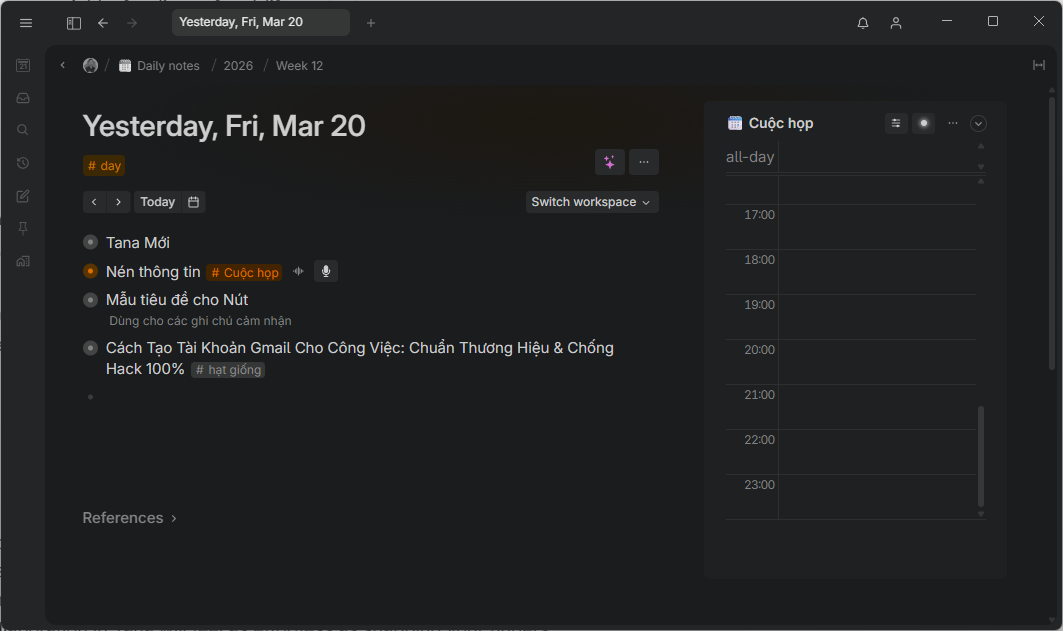
On the glowing screen in front of me is a pitch-black canvas with a few minimalist bullet points. This is Tana.
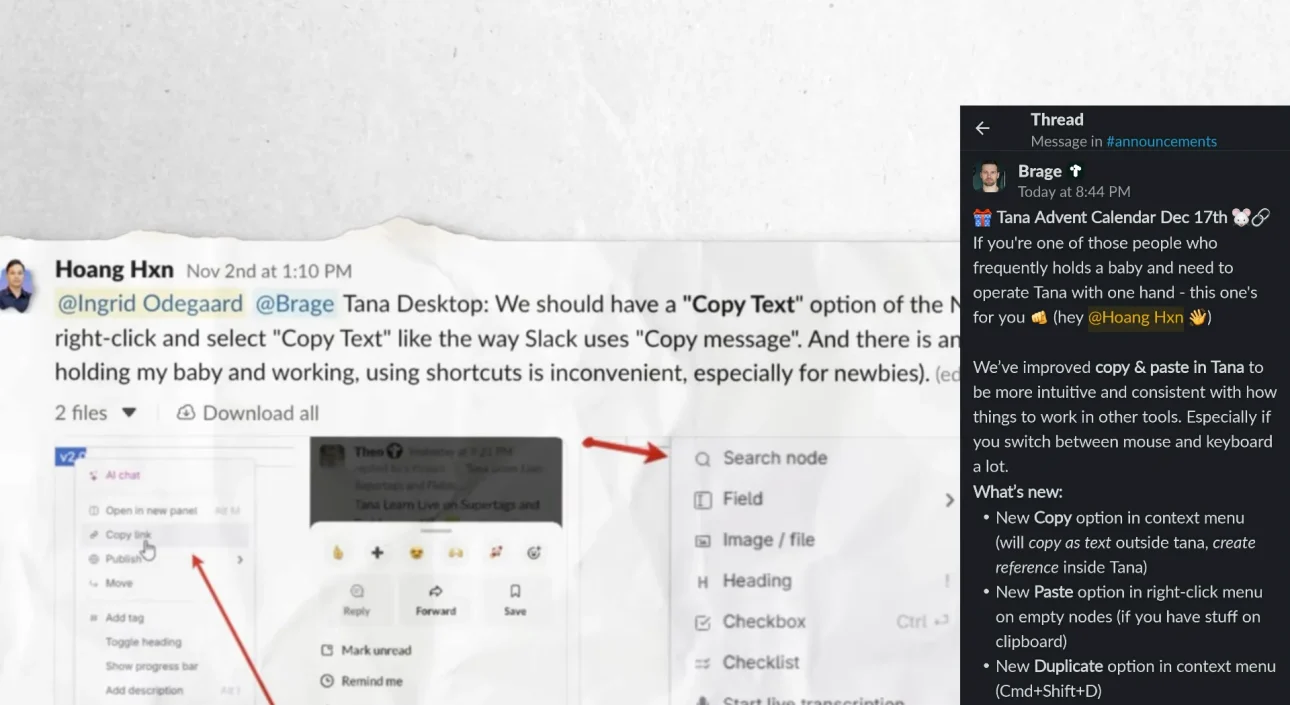
Recently, Brage from the Tana development team gave me a shoutout during their Advent Calendar update: “If you're one of those people who frequently holds a baby and need to operate Tana with one hand – this one's for you (hey @Hoang Hxn).” In the community, people treat it as a fun nickname—the “one-handed dad.” But for me, it isn’t a joke. It is my daily reality.
And it is exactly why I am absolutely obsessed with this software.
People often ask me: “Why Tana? There are a hundred note-taking apps out there. What makes this tool so special?”
To answer that, I have to take you back to the darkest period of my career.
Before I built my current digital business, I was a severely burned-out software engineer. When I transitioned into solopreneurship and coaching, the pressure multiplied.
Like many of you, I plunged headfirst into the ultimate productivity trap: The Collector’s Fallacy.
I naively believed that if I just saved enough information, I would eventually become successful. I jumped from Evernote to Notion, from Roam Research to Obsidian. I burned hundreds of hours building beautifully aesthetic dashboards and perfectly nested folders. I clipped thousands of articles, highlighted hundreds of books, and hoarded endless YouTube tutorials.
But my actual output? Almost zero.
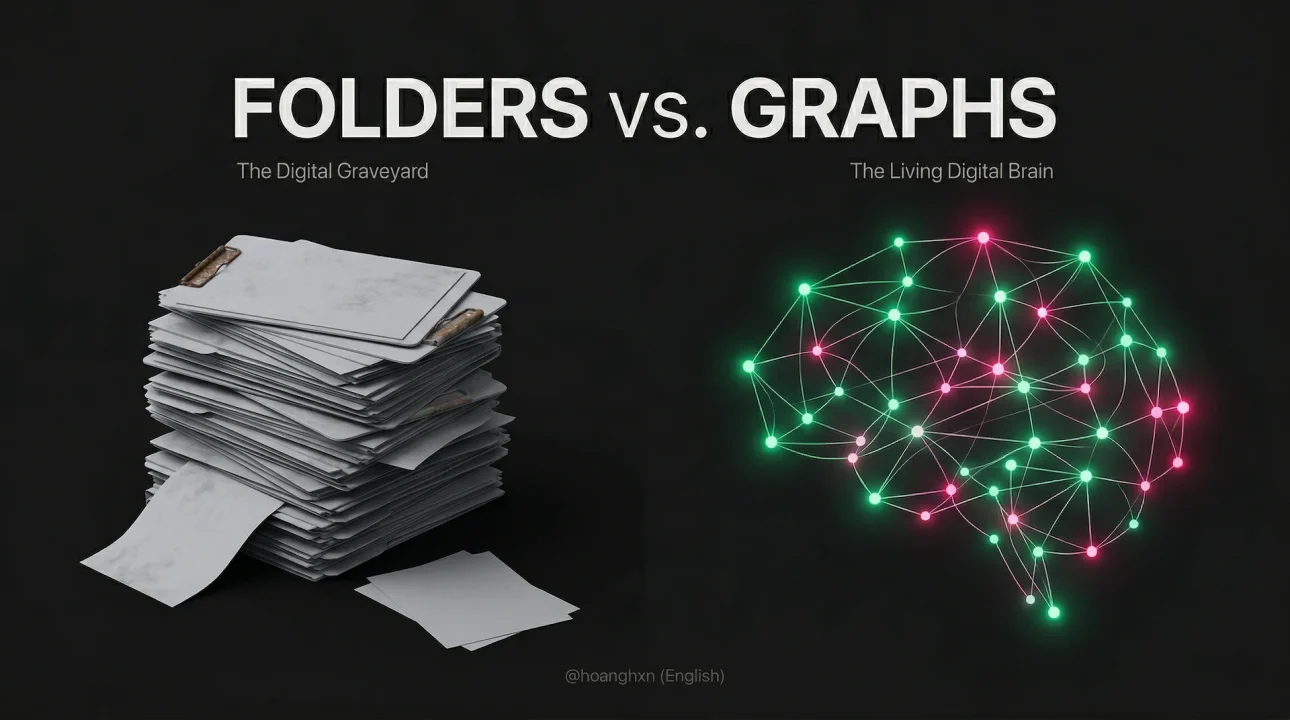
I thought I was building a “Second Brain,” like everyone advised. But in reality, I had just turned myself into an exhausted librarian, meticulously managing a digital graveyard.
I didn't need another storage unit to hide information in. I needed a Digital Brain—a living, breathing system that could think, connect, and operate on my behalf.
The tools I was using were like isolated islands. My data was fragmented and entirely stripped of its original context. Whenever I actually needed to write a piece of content or design a course module, I would stare blindly at my massive database and feel completely paralyzed.
I was drowning in information, yet starving for wisdom.
That was when I realized I was holding the map upside down. I was obsessed with having the right tools and doing the right tasks, but I had completely lost sight of being the core architect of my life. I needed a system that reflected how my brain actually works, even under the most extreme physical constraints.
And then, Tana found me.
I don't love Tana because it has flashy AI features or a trendy UI. I am obsessed with it because it strips away the noise and forces me to confront the work.
When you only have one free hand, you don't have the luxury of clicking through five layers of folders just to find a note. You need a system that is ruthless in its efficiency.
Here is how Tana helped me perfect my Digital Brain and escape the Collector's Fallacy:
1. The Absolute Focus of the “Today” Page
Instead of throwing me into a maze of wikis and boards, Tana drops me into one single place every morning: The Today node. It is a blank slate. It forces me into discipline. I don't have to waste mental energy deciding where a document belongs; I just dump my thoughts into today's page, tag them, and let the system route them automatically. It is the ultimate antidote to decision fatigue.
2. Resurrecting “Orphaned Data”
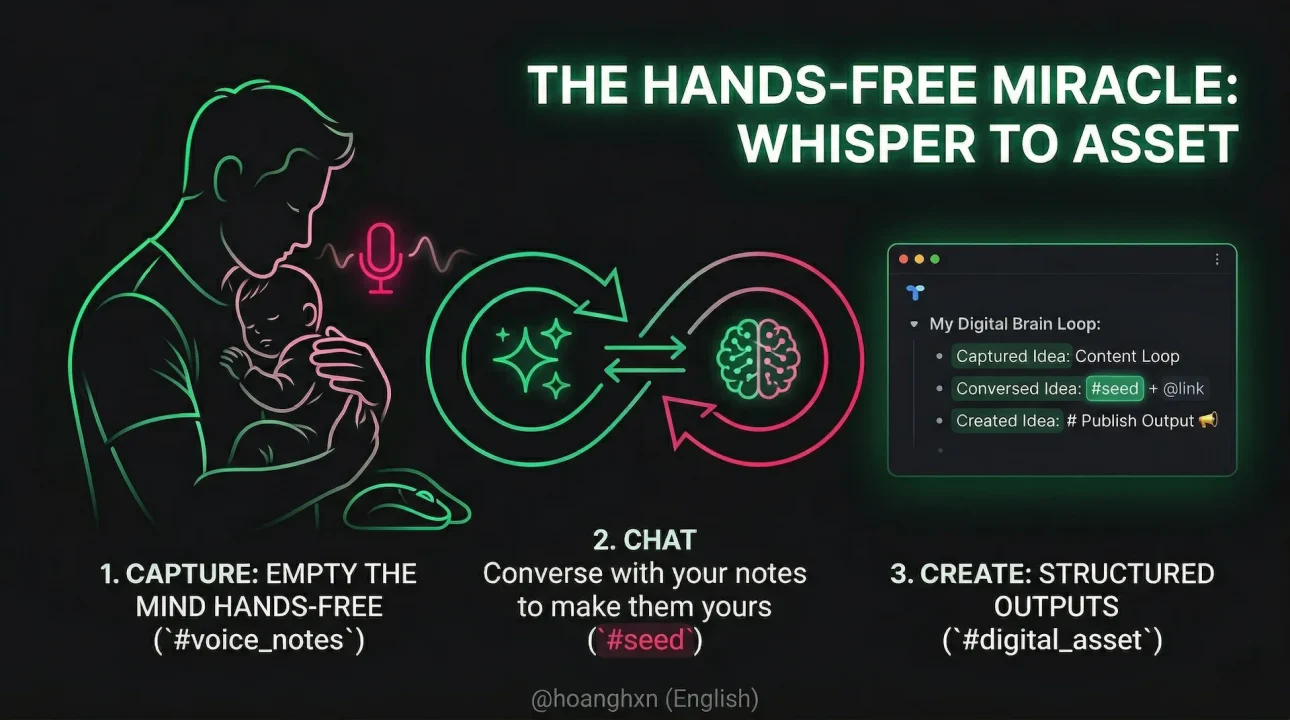
In traditional apps, an idea placed in a folder is an idea forgotten. Orphaned data is dead data. Tana’s architecture relies on the Knowledge Graph. If I have a sudden flash of insight for my coaching program while rocking my daughter to sleep, I just type it, tag it #seed, and type @ to link it straight to my active project. I don’t hide information anymore. I connect it.
3. The Hands-Free Miracle
This is the ultimate weapon for a one-handed dad. With Tana's Voice AI, I can literally whisper a raw, unstructured thought into my phone while walking the baby. The AI automatically transcribes it, extracts the action items, and places them in the exact right spot in my workspace. It bridges the gap between the chaos of real life and the structure of digital work.
Today, I run a growing digital business. I create content, coach students, and build digital assets—all while maintaining a deep, present connection with my family. The Digital Brain I built in Tana was the lever that helped me flip my life right-side up.
But I have to give you a warning.
Tana is not a magic wand. It is a mirror. If you approach it with an empty mindset, without a clear goal or a real-world project to apply it to, it will simply become a very expensive digital dump. It will just help you link your useless thoughts together much faster.
Stop asking what the tool can do for you. Ask yourself if you have cultivated a core mindset sharp enough to wield it.
If you are still struggling with dead folders, if you are still exhausted from acting as a librarian for your own thoughts… it might be time to stop hoarding and start building.
And for this one-handed dad, Tana is the only place to do it.
Realizing you need a Digital Brain is one thing. Opening a blank software screen and knowing exactly what to type is another.
Remember, I only have one free hand to work with. I don't have time for complex systems with dozens of convoluted steps. I use one single 3-step loop to turn chaotic information into profitable digital assets every single day.
In my next article, I will open up my entire Tana blueprint and walk you through it step-by-step.
👉 Read Next: [The 3C Habit Loop (Capture – Chat – Create): How the “One-Handed Dad” Built a Digital Brain from Scratch]
Get your workspace ready. It's time to build!

Subscribe to
Business Stories
Join HXN Notes — your shortcut to mastering digital business. of more than 2.000 friendly readers.
200+ reviews
Every week, I share proven strategies on digital business, smart productivity, and mindset — delivered straight to 2,000+ friendly solopreneurs building their freedom lifestyle.
[fluentform id="3"]
By subscribing, you'll get my free weekly newsletter. Occasionally, I'll mention my solutions, tools, books or courses — always with honesty. You can opt-out at any time with no hard feelings 😉 Here’s our privacy policy if you like reading.
A free private community for independent creators, solopreneurs, and digital explorers.
Here, we learn from each other, share our wins (and struggles), and build the freedom lifestyle together.
My signature course to help you start from scratch, grow your skillset, and earn from your knowledge online.
No fluff — just the systems, strategies, and templates I wish I had when I began.
Master digital note-taking using tools like Tana.
Capture ideas, organize your thinking, and build a second brain that actually works (for work and life).
Your first $1 online starts here.
Blueky guides you to turn what you already know into a simple, profitable digital offer — step by step.